
Howell Quality Roofing repairs storm damage on roofs in Howell, NJ, serving surrounding cities including Ramtown, Freehold Township, Wall, West Freehold and Vista Center, and in more than 20 years we have worked through nor’easters, summer thunderstorms and confirmed tornadoes. Storm damage is a roofing problem and a paperwork problem at the same time, and both have to be handled well for the repair to be paid for and done right.
We photograph the damage before anything is moved, write it up in a report you can submit with your own claim, and separate fresh storm damage from older wear so the report holds up. When you ask, we walk the roof with your insurance adjuster so both sides are looking at the same evidence.
The repair itself is scoped to what the storm actually did. Each item, from replaced shingles to new flashing or decking, appears on its own line, so your adjuster can match our scope against their estimate without guessing at what a lump sum includes.
Types of Storm Damage
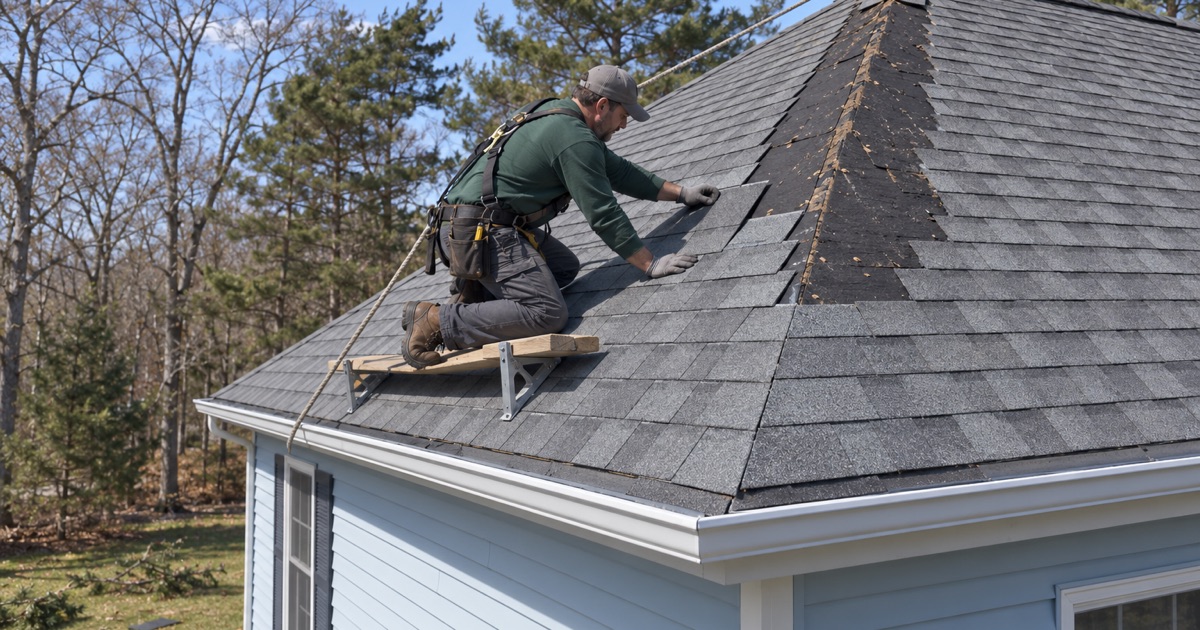
Wind Damage
Wind lifts the edges of shingles, breaks their seal strips and creases them at the nail line. Creased shingles may lie flat again after the storm, but they no longer seal and will lift in the next gust. Wind also peels shingles off ridges, rakes and corners, where uplift is strongest. We check every slope, not just the side facing the storm.
Wind can also loosen flashing, bend drip edge and pull ridge caps free. Those details matter because they let water in long after the storm has passed, often in a different part of the house from where shingles went missing.
Hail Damage
Hail bruises asphalt shingles, knocking off granules and cracking the mat underneath. The damage can be hard to see from the ground, and it shortens a roof’s life even when it does not leak right away. We look for circular bruises, dents in soft metal such as vents and gutters, and damage that follows a consistent direction across the roof.
Impact-rated shingles tested to UL 2218 Class 4 resist hail better than standard shingles. If your roof needs replacement after a hail claim, we can explain the options and how they compare.
Fallen Trees and Limbs
A falling limb can crack shingles, split decking and break rafters. Even when the roof looks intact afterward, the impact can loosen fasteners and flashing nearby. We inspect the area from the attic as well as the roof to find damage to the framing that is not visible from outside.
Tree damage claims often involve two separate costs: the damage to the house and the cost of removing the tree from the structure. Keep the tree service’s invoice separate from ours, and photograph the tree in place before it is cut, since adjusters usually want to see both.
Tornado and Straight-Line Wind Damage
After a tornado, the National Weather Service office in Mount Holly surveys the damage path and rates it on the Enhanced Fujita scale. On April 1, 2023, an EF-2 tornado that began in Jackson ended in Howell, and two EF-0 tornadoes touched down in the township in June 2017. A survey record helps show that damage came from a confirmed event on a specific date.
Straight-line winds from strong thunderstorms can do similar damage without a tornado. The roof evidence looks much the same, and our report describes what we found rather than which kind of wind caused it.
Documenting Damage for Your Claim
Photos Before Anything Moves
The first photos after a storm are the most valuable. We photograph the roof, the attic and any interior damage before tarping or removing debris, and we date the record. Those photos show the scene as the storm left it, which is exactly what an adjuster needs to see.
Your own photos help too. Pictures of shingles in the yard, water stains as they appear and the date the leak started give the claim a timeline. Keep them together with our report and every receipt for temporary repairs, so the whole record can be handed over in one piece.
Storm Damage Versus Wear and Tear
Insurance pays for sudden damage, not for a roof wearing out. Creased and torn shingles, fresh breaks with clean edges and impact marks point to a storm. Curling, brittle, granule-bare shingles across every slope point to age. Our report keeps the two apart honestly, because claims built on old wear are the ones that get denied.
When a roof has both, we say so. An older roof with real storm damage may still have a valid claim for the damaged area, and the report should make clear which part is which.
Meeting Your Adjuster
When you ask, we meet the adjuster at the house and walk the roof together. We point out what we found, explain the repair it requires, and answer questions about the scope. The decision on coverage is the insurer’s, and any negotiation is between you, your insurer and a public adjuster if you hire one.
New Jersey Storm Claims
State Guidance and Deductibles
New Jersey’s Department of Banking and Insurance publishes storm claims guidance for homeowners. Hurricane deductibles, which are larger than standard deductibles, apply only in narrow circumstances under DOBI Bulletin 11-16. Most wind storms, nor’easters and thunderstorms are handled under the policy’s regular deductible.
Sales Tax on Storm Repairs
If a storm leads to a full roof replacement, that work is generally an exempt capital improvement, documented with Form ST-8. A partial repair is generally taxable. We keep repair and replacement work on separate lines so the tax treatment is clear to you and your insurer.
Contracts After a Storm
After large storms, out-of-area contractors often arrive looking for quick signatures. New Jersey home improvement contracts must include the three-business-day cancellation notice, and contractors must be registered under the Contractors’ Business Registration Act. Our contracts include that notice, so you have time to read the scope and compare it before work begins.
- 20+ Years on Monmouth County Roofs
- Line-Item Written Estimates
- Same-Day Storm Tarping