Howell Quality Roofing has performed roof inspections in Howell, NJ for more than 20 years, serving surrounding cities including Ramtown, Freehold Township, Wall, West Freehold and Vista Center. We inspect roofs for homeowners planning ahead, sellers getting ready to list, landlords keeping a property up to standard, and owners checking for damage after a storm.
An inspection that stops at the shingles misses half the story. We check the attic as well as the roof, because the underside of the deck shows staining, frost marks, damp insulation and daylight that the top surface hides. What we see inside tells us where to look hardest outside.
Every inspection ends in writing. You get a report with photos of each finding, what it means, and whether it calls for a repair now, a watch item for later, or nothing at all. If the roof can be repaired, we say so plainly before replacement is ever raised.
What a Full Roof Inspection Covers
The Attic and Roof Deck
We start inside, looking at the sheathing for water stains, dark rings around nails, delamination and soft spots. We check the insulation for compressed or wet areas and look for daylight at the ridge, around chimneys and at the eaves where it should not be.
The attic is also where ventilation problems show first. Rusted nail tips, mildew on the north side of the deck and frost in winter all point to warm, moist air that is not leaving the attic. Those findings go into the report because they shorten the life of any roof.
Shingles and the Roof Surface
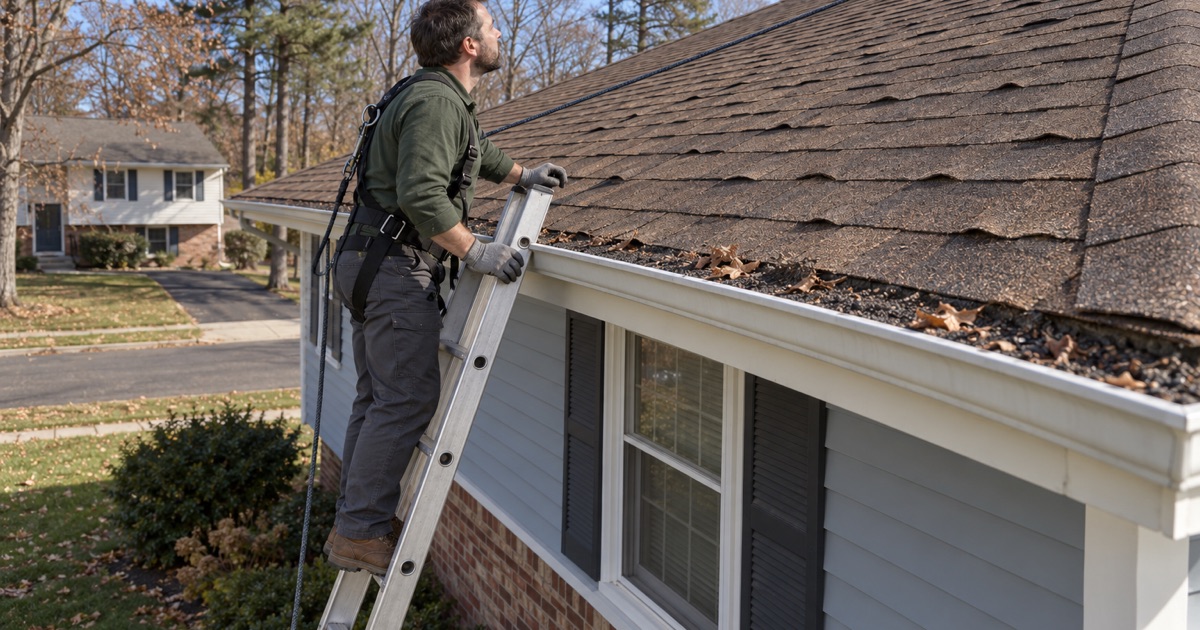
On the roof we look at every slope for lifted, creased, cracked or missing shingles, exposed nails, granule loss and blistering. We note the shingle type, whether it is three-tab or architectural, and check the edges to count how many layers are already on the house.
The layer count matters more than most owners expect. Under New Jersey’s rehabilitation subcode, a roof with two or more layers has to be torn off before a new one goes on, so an inspection that finds a second layer changes what a future replacement will cost.
Flashing, Chimneys and Penetrations
We check step flashing along walls, counter flashing and the cricket behind the chimney, kick-out flashing at the bottom of sidewalls, and every pipe boot, exhaust vent and skylight curb. These details cause most leaks, and they wear out on their own schedule regardless of the shingles.
On the chimney itself we look at the crown, the cap and the mortar joints above the roofline. A cracked crown or open joints let water into the masonry, and that water can show up inside looking exactly like a flashing leak.
Ventilation, Gutters and Edges
We compare soffit intake with ridge or box vent exhaust, look for blocked soffits, and check that bath and kitchen fans vent outside. At the edges we look for drip edge at the eaves and rakes, rot in the fascia, and gutters and leaders that are pitched and clear.
On wooded lots we add the trees to the report. Limbs touching or hanging over the roof, valleys packed with pine needles and shaded slopes holding moss each shorten a roof’s life in a different way, and each has a different fix, from trimming to valley cleaning to algae-resistant shingles at the next replacement.
Inspections for Buying, Selling and Renting
A Roof Report Before You List
A buyer’s home inspector will walk your roof, and a vague finding can turn into a price cut or a delayed closing. Before you list, we inspect and write a condition report you can hand to the buyer’s inspector, covering age, layers, flashing and any repairs we recommend.
If repairs are needed, you decide whether to make them before listing or disclose them and let the buyer price them in. Either way, the conversation starts from a written record rather than a guess on inspection day.
Buying a House With an Older Roof
A general home inspector covers the whole house and often notes only that the roof is old or near the end of its life. If you are buying, a roofing inspection adds detail: layers, decking condition seen from the attic, flashing and a realistic sense of whether you face repairs or a replacement soon.
That detail is useful during the attorney review and inspection period of a New Jersey home purchase, when repair requests and credits are still being negotiated. A written finding about a second layer, rotted decking or failed chimney flashing carries more weight than a general note that the roof looks aged.
Rental Properties in Howell
Renting out a house in Howell requires a Rental Certificate under Township Ordinance 178-24, and the township’s guidelines say the roof, chimney, gutters and downspouts must be kept in good repair. We inspect rental properties against those items so the owner knows what needs work before the township’s inspection.
The same certificate is needed when the occupancy of a rental changes, so a roof problem found between tenants can hold up the next lease. Checking the roof, gutters and chimney when a tenant gives notice leaves time to repair them before the new occupants are due to move in.
Storm, Insurance and Association Inspections
After a Wind Storm or Tornado
After a storm we look for creased and torn shingles, lifted tabs, broken flashing and impact damage, and we photograph it all before anything is moved. Howell has seen confirmed tornado damage, including an EF-2 that ended in the township on April 1, 2023, and storm damage is often worse up close than it looks from the yard.
Our report separates fresh storm damage from older wear, because insurers pay for sudden damage and deny claims built on age. If you ask, we meet your adjuster on the roof and walk through the same photos.
Townhouse and Adult Community Roofs
In many townhouse and 55-plus communities, the association rather than the owner is responsible for the roof. We check the governing documents before quoting any work, and for boards we inspect roofs across a community so repairs and replacements can be planned and budgeted.
New Jersey requires planned real estate developments to keep a capital reserve study under N.J.S.A. 45:22A-44.2. Roof findings from an inspection give that study real condition data instead of an assumed age for every building.
Commercial and Low-Slope Roofs
On commercial and low-slope roofs we inspect the membrane, whether modified bitumen, EPDM or TPO, along with seams, flashings at walls and curbs, drains and scuppers. Ponding water, open seams and blistering are recorded with photos and locations so repairs can be priced accurately.
Flat roofs fail slowly and then suddenly, because water that sits on a membrane finds every weak seam over time. A yearly inspection catches a lifted seam or a clogged drain while it is still a small repair, rather than after water has soaked the insulation board beneath the membrane and the whole section has to come off.
After the Inspection
Reading the Report
Each finding in our report carries a photo, a plain description and a priority: repair now, watch, or no action. Where a repair is needed, the scope lists each item separately so you can compare our price with anyone else’s line by line.
The report is yours to keep whether or not we do the work. Owners use it to get a second opinion, to plan repairs over a couple of seasons, or to show a buyer, a tenant or an association what condition the roof was in on the day it was inspected.
Planning Repairs or Replacement
Most inspections end with a short list of repairs, not a new roof. When a roof is near the end of its life, we explain what we found, roughly how much time it has, and what a replacement would involve, including any second layer, decking or ventilation work, so you can budget before a leak forces the decision.
- 20+ Years on Monmouth County Roofs
- Line-Item Written Estimates
- Same-Day Storm Tarping