Roofing in Howell, NJ, Traced From the Attic Up

Leak repairs, full tear-offs and storm write-ups with every line of the estimate priced on its own.

Howell Quality Roofing has spent more than 20 years repairing and replacing roofs in Howell, NJ, along with leak repair, gutter installation, metal and flat roofs, chimney work, skylights and storm damage repair for homes and small commercial buildings across Monmouth and Ocean counties. Most calls start with a stain on a ceiling or a few shingles in the yard, and most end with a written answer about what the roof actually needs.

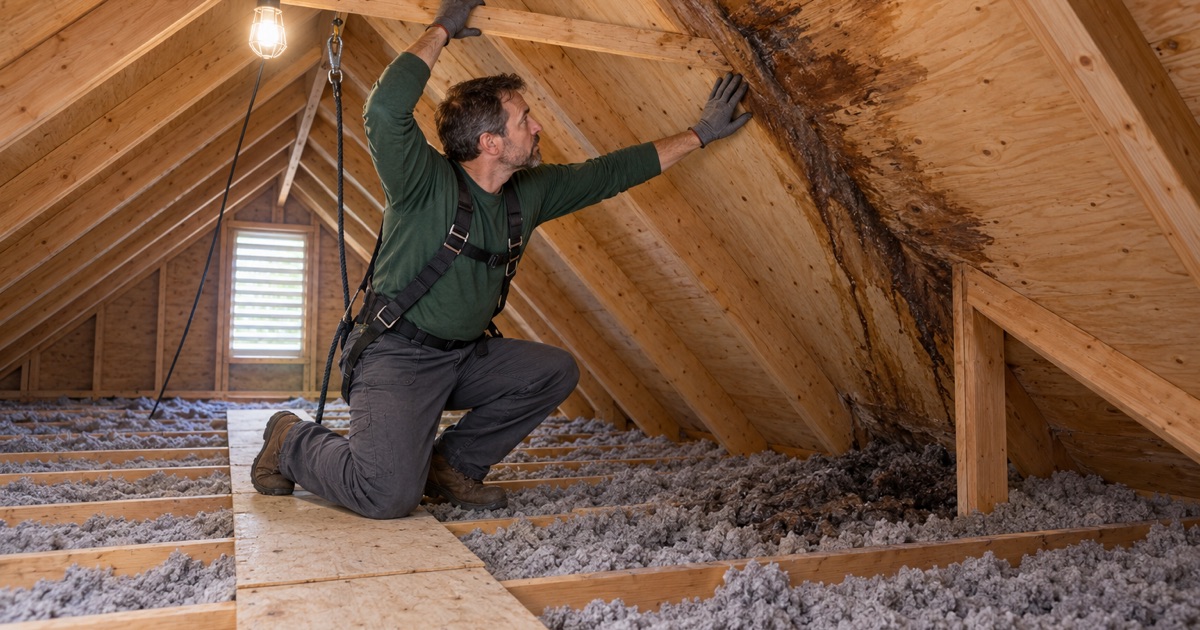
That answer comes from looking at both sides of the roof deck. We go into the attic as well as onto the shingles, so a leak is traced to the point where water really gets in rather than to the spot where it happens to drip. Only after that do we say whether a repair will hold or whether the roof is ready to come off.

When it is time for a new roof, the estimate is written so you can read it. Tear-off, decking, underlayment, flashing, ventilation and gutters each sit on their own line with their own price, which makes our proposal easy to hold up against anyone else’s and keeps surprises out of the final invoice.

Get Your Free Quote

Fast response • No obligation

So we can reach you about your request.

So we can send you a confirmation after you submit this inquiry form.

  • 20+ Years on Monmouth County Roofs
  • Line-Item Written Estimates
  • Same-Day Storm Tarping

What we do

Our Services

Roof repair, replacement and storm work for Howell, NJ homes

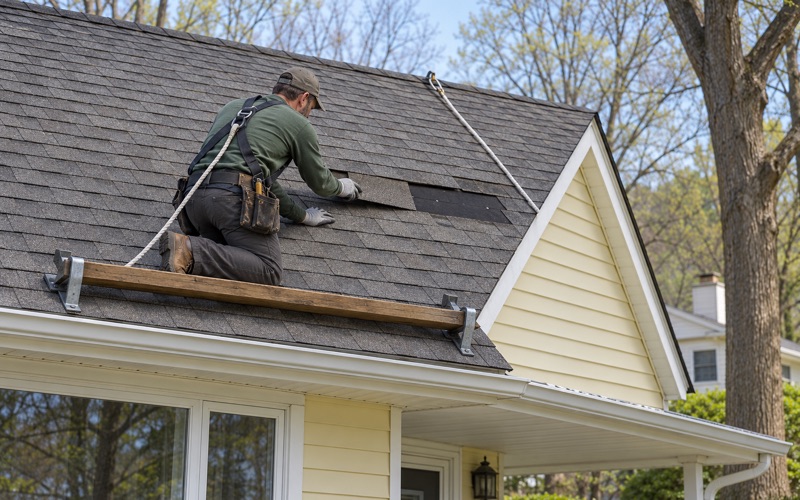
A roofer sliding a replacement shingle into a gap on the front slope of a Howell ranch.

Roof Repair

Shingle, flashing, pipe boot and storm repairs for Howell roofs, with every leak traced from the attic and a plain answer on repair versus replacement.

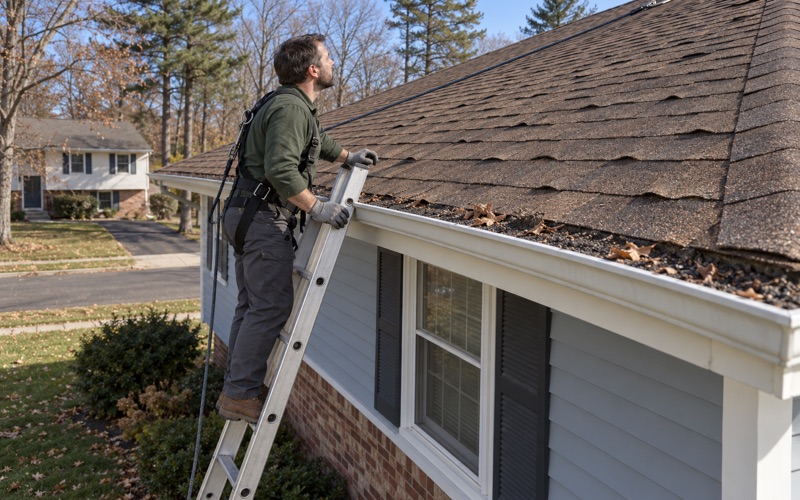
A roofer on a ladder checking curled shingles and loose granules at the gutter of a Howell bi-level.

Roof Inspection

Roof and attic inspections with a photo report you can keep, hand to a buyer's inspector, or use to plan repairs before they turn into leaks.

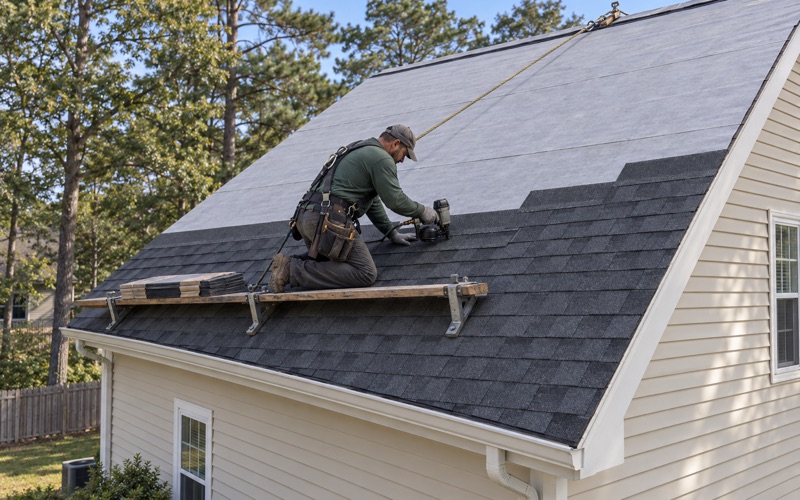
New architectural shingles being nailed over fresh underlayment during a roof replacement on a Howell colonial.

Roof Replacement

Full tear-off roof replacements with new flashing, balanced ventilation and a written scope that prices every part of the job on its own line.

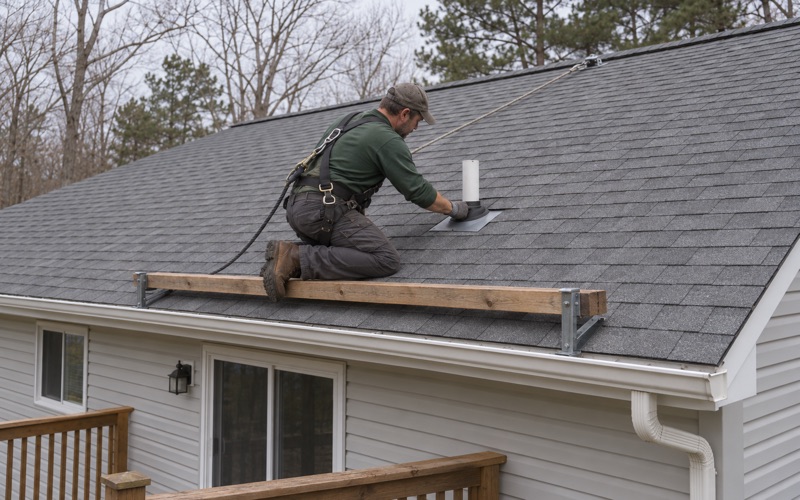
A roofer fitting a new pipe boot around a plumbing vent on the rear slope of a Howell split-level.

Roof Leak Repair

Leaks traced from the attic to the exact point water gets in, then repaired at the source, with same-day tarps when water is coming through.

A seamless gutter being lifted into its last hanger along the fascia of a Howell colonial.

Gutter Installation

Seamless aluminum gutters and leaders sized to your roof, pitched to drain, and tied into the roof edge so water ends up away from the foundation.

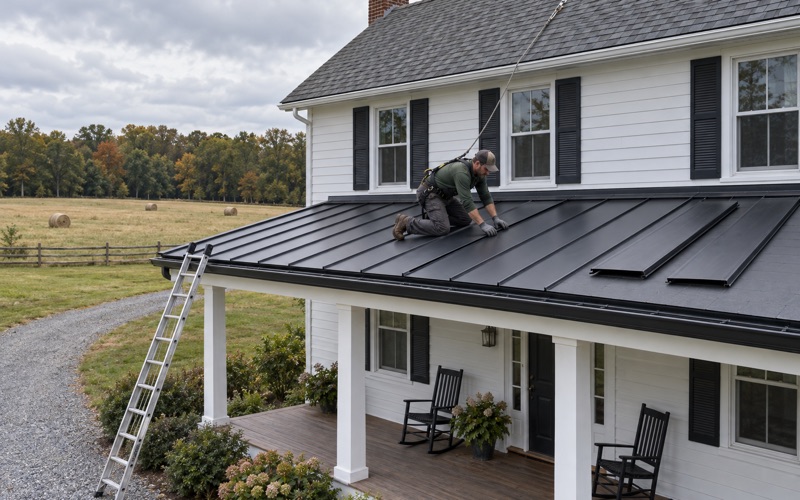
Standing-seam steel panels being laid on the low porch roof of a farmhouse on the west side of Howell.

Metal Roofing

Standing seam metal roofs and metal accents over porches and bays, detailed at every eave, valley and wall so the panels stay tight for decades.

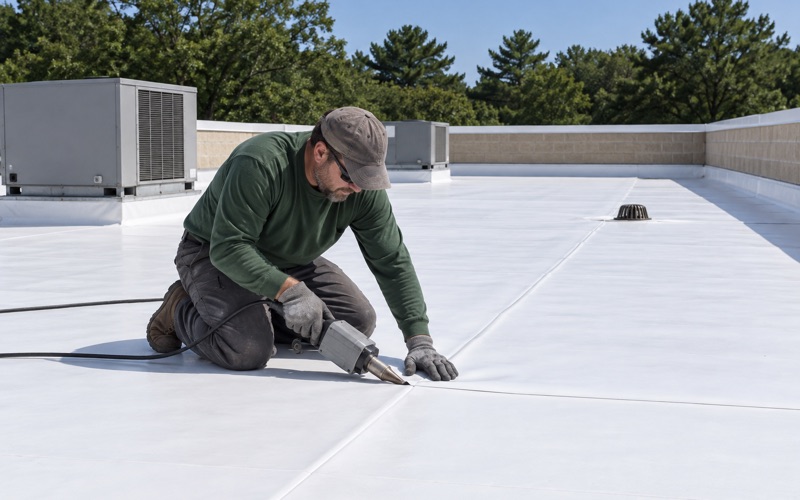
A roofer welding a white membrane seam on the flat roof of a Route 9 retail building in Howell.

Commercial Roofing

Flat and low-slope commercial roofs in TPO, EPDM and modified bitumen, plus shingle and metal roofs on offices, shops and mixed-use buildings.

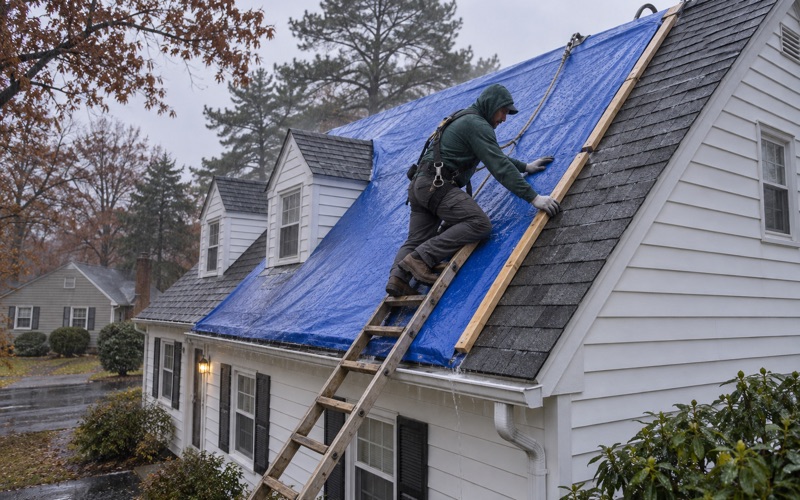
A blue tarp being battened over a damaged roof on a Howell Cape Cod in steady rain.

Emergency Roof Repair

Same-day tarping and temporary repairs when wind, a fallen limb or a sudden leak opens your roof, with photos taken before anything is moved.

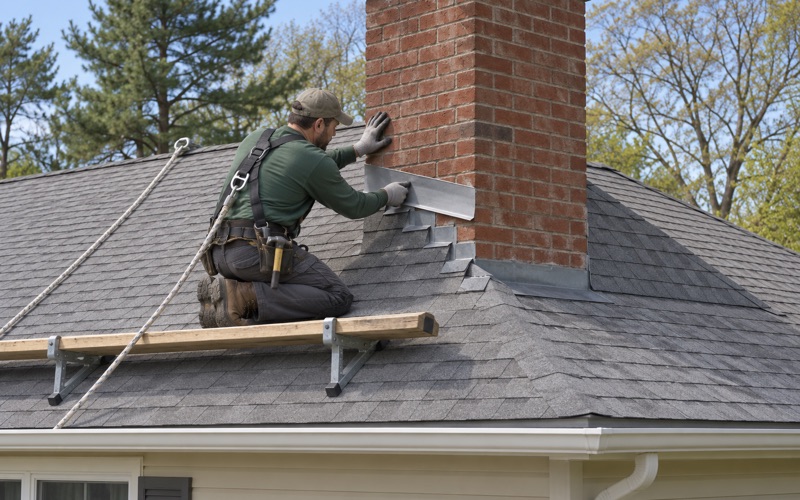
A roofer setting counter flashing into the mortar joint of a brick chimney on a Howell ranch.

Chimney Repair

Chimney flashing, crickets, crowns, caps and repointing, repaired where the chimney meets the roof so water stays out of the masonry and the attic.

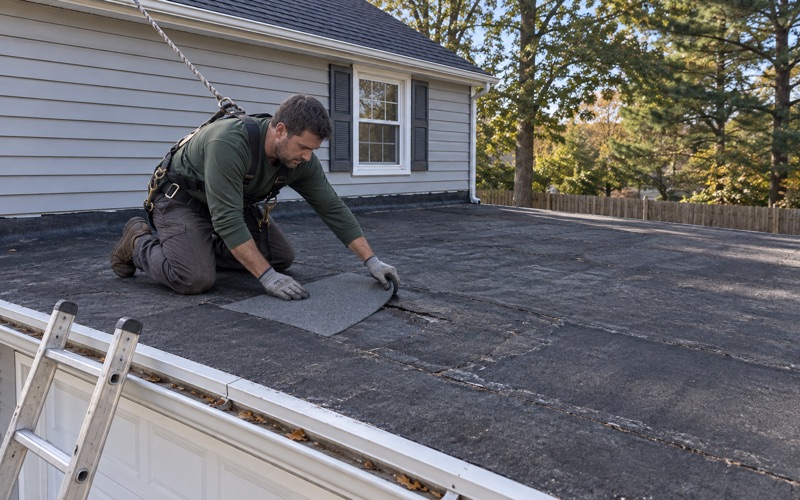
A self-adhered membrane patch being pressed onto the flat roof over a Howell garage.

Flat Roof Repair

Repairs to EPDM, TPO and modified bitumen roofs on porches, additions, garages and commercial buildings, from open seams to ponding and failed drains.

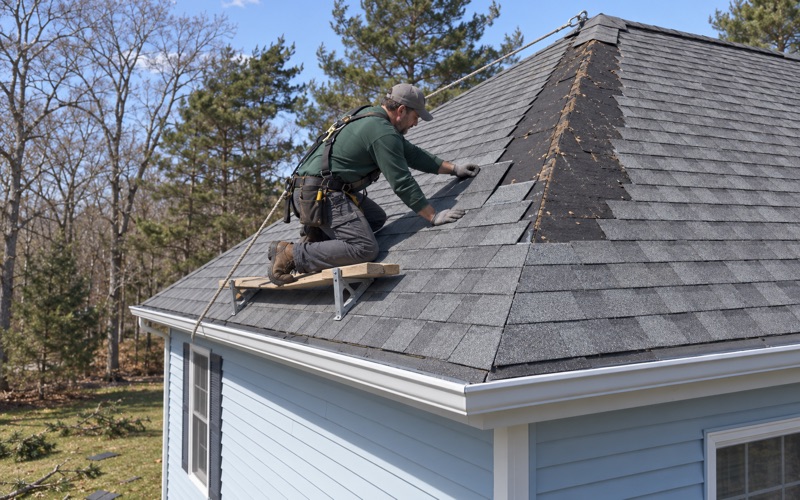
A roofer re-shingling a hip where wind tore the cap and shingles off a Howell colonial.

Storm Damage Roof Repair

Wind, hail and fallen-limb damage photographed, written up for your insurance claim, and repaired to a scope your adjuster can check line by line.

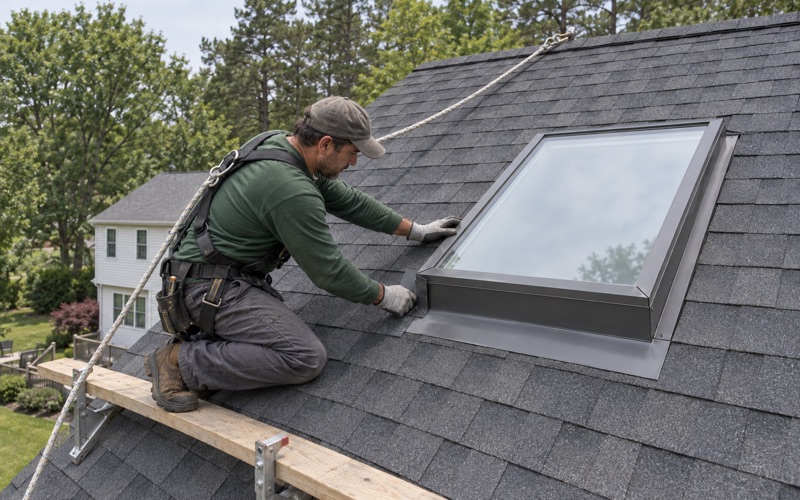
A roofer fitting step flashing up the side of a new skylight on a Howell colonial.

Skylight Installation

New and replacement skylights, curb-mounted or deck-mounted, framed into the roof and flashed so the light comes in and the water stays out.

Two Decades on Monmouth County Roofs

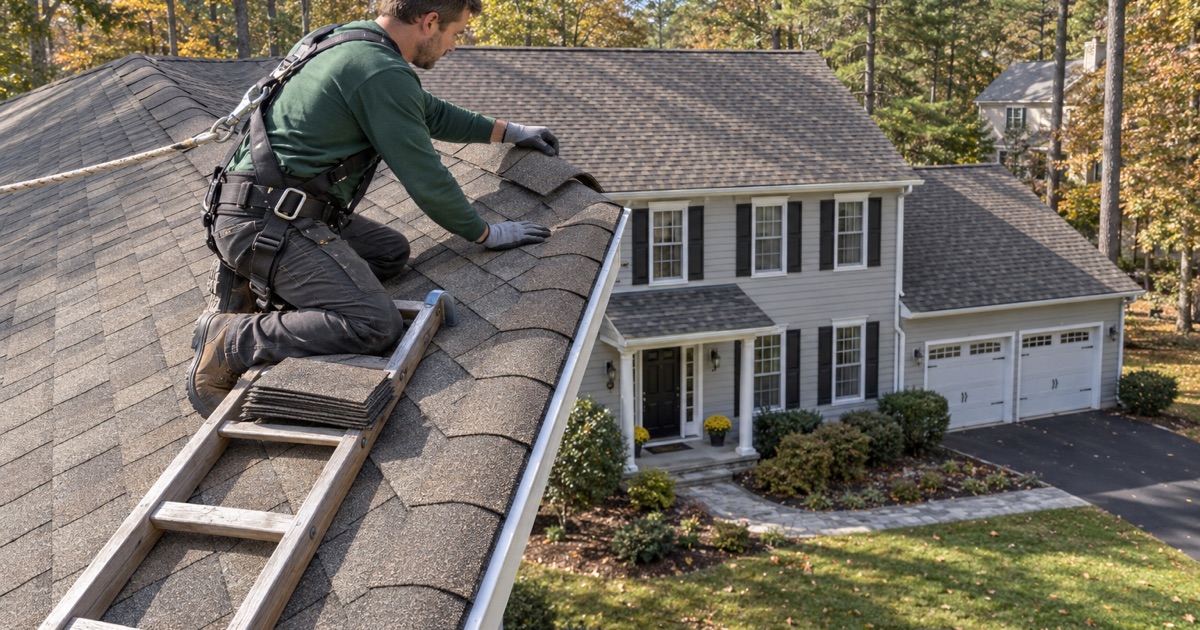
A roofer capping the ridge of a newly shingled 1980s colonial on a wooded lot in Howell Township.

20+ Years of Roofing in the Howell Area

We have worked on roofs in and around Howell for more than 20 years, through nor’easters, summer tornado warnings and the long run of colonials and split-levels reaching their second and third roofs. That time on local roofs is the main reason our estimates name the problems a Howell house is likely to have before we even climb the ladder.

Why Choose Howell Quality Roofing

Leaks Traced From the Attic

Every leak call includes a trip into the attic, because water often runs along a rafter or the top of a wall before it shows on a ceiling. Finding the real entry point means the repair goes where the roof failed, so you pay once rather than paying a contractor who caulks the nearest shingle and leaves.

Repair Before Replace

No roof is quoted for replacement until we have said, in writing, whether a repair would hold. Plenty of Howell roofs leak from one pipe boot or one chimney flashing on an otherwise sound field of shingles, and a straight answer there saves thousands rather than steering you toward the biggest ticket.

Decking Shown Before It Is Replaced

Rotten plywood is never replaced sight unseen. When the old roof comes off, any damaged decking is photographed and shown to you, and it is billed at the per-sheet price already set in the contract, so the final number moves only by sheets you have seen rather than by a vague change order.

New Flashing on Every Roof

Step, counter and chimney flashing are replaced with the roof instead of being bent back and reused under new shingles. Old metal that has been nailed, lifted and re-bent is where most second-roof leaks start, so new flashing keeps the chimney and sidewalls dry rather than undoing a new roof in its first winter.

Wooded Lots Planned For

Much of Howell is built in the trees, and those roofs fail differently. Every estimate on a wooded lot calls out overhanging limbs, needle-packed valleys and shaded, mossy slopes, so the plan covers what the trees are doing to the roof rather than pricing it like a bare lot in a new development.

Storm Damage Documented for Your Claim

After a wind storm we tarp the same day and photograph the damage before a single shingle is moved. That record goes into a written report for your own claim, and we meet the adjuster on site when asked, so the claim rests on evidence rather than on a guess made after the roof was patched.

Roof Leaks and Repairs

A roofer in the attic of a Howell colonial following a leak stain down the sheathing beneath a valley.

Finding a Roof Leak You Cannot See

Some leaks never show where you expect, and some are not the roof at all. A bathroom fan venting into the attic, a sweating duct or a slow plumbing drip can all stain a ceiling. We check the attic, the insulation and the roof surface together, so you are not paying for a roof repair to fix a condensation or plumbing problem.

Ceiling Stains After Rain

A brown ring that grows after storms usually means water is getting through the roof deck and soaking the insulation before it reaches the drywall. We match the stain to what sits above it, whether a vent, a valley or a nail pop, and repair that source so the ceiling can be painted once and stay clean.

Leaks at Chimneys, Vent Pipes and Skylights

Penetrations are where most roof leaks begin. Cracked rubber pipe boots, worn lead flashing boots, chimney step flashing pulled loose and old skylight curbs all let water in long before the shingles fail. We replace the boot, flashing or curb flashing with the right part for that opening rather than sealing over it with tar.

Leaks Where Roofs Meet and at Dormer Walls

Additions, garages and dormers create joints where one roof runs into another or into a sidewall. Those joints depend on step flashing and kick-out flashing to steer water away from the wall. When they are missing or buried, water runs behind the siding, and we open the joint, reflash it and close it properly.

Ice Dams Along the Eaves

In a cold snap, heat escaping into the attic melts snow that refreezes at the colder eave and backs water up under the shingles. We address both halves: ASTM D1970 self-adhering ice and water barrier at the eaves on new roofs, and attic air sealing and ventilation that keep the deck cold enough to stop the dam forming.

Water Behind the Gutters and Fascia

Water that gets between the gutter and the fascia rots the board and stains the soffit. Missing drip edge is the usual cause, along with gutters pitched the wrong way. We install drip edge at the eaves and rakes and reset or replace the gutters so roof water lands in the trough rather than behind it.

Emergency Roof Tarping When the Roof Is Open

A limb through the deck or a section of shingles torn off in a storm leaves the house open to the next rain. We put a secured tarp over the opening the same day, photograph the damage first, and schedule the permanent repair once the weather clears, so the interior damage stops growing while the claim is sorted out.

Repairing Versus Replacing a Leaking Roof

One leak on a roof with years left in it is a repair. Several leaks, curling or brittle shingles on every slope, and granules piling in the gutters usually mean the roof is near the end. We tell you which one you have, with photos, and price the repair even when a replacement is the better long-term choice.

Replacing a Roof on a Howell House

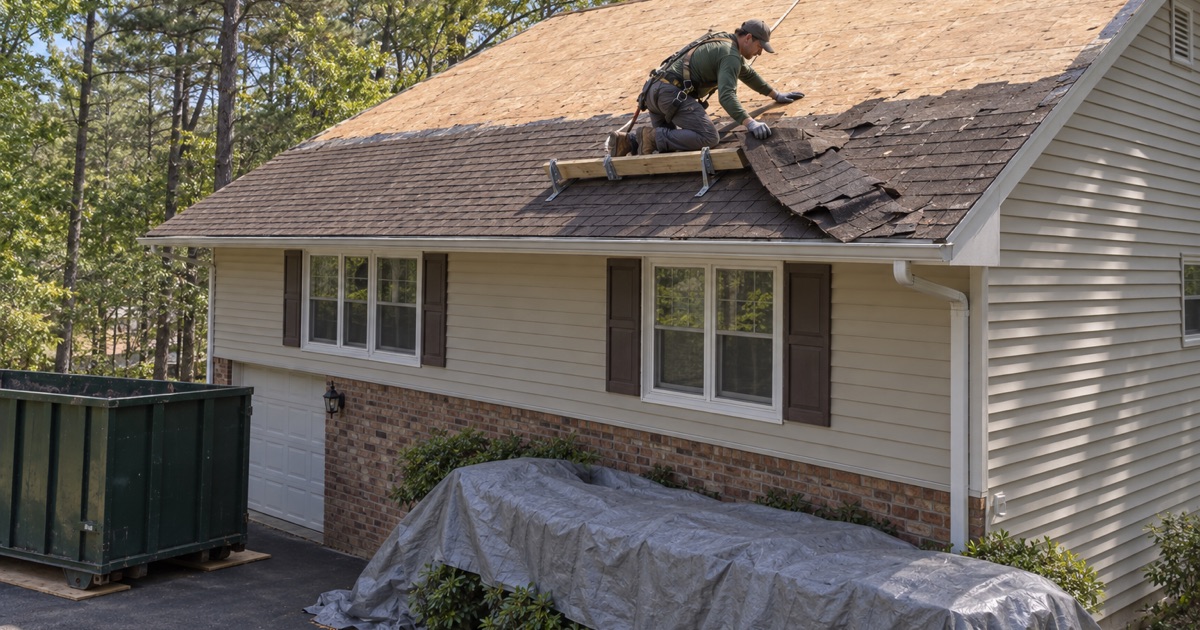
Old shingles being torn off a Howell bi-level down to the board deck at the start of a roof replacement.

How a Full Roof Tear-Off Runs

A replacement starts with the dumpster, tarps over the beds and plywood against the siding. The old shingles come off down to the deck, damaged sheets are photographed and replaced, then drip edge, ice barrier, underlayment, flashing and shingles go on in order. Each day ends with cleanup and a magnet sweep for nails.

New Jersey’s Two-Layer Limit on Re-Roofing

Under the state’s rehabilitation subcode, N.J.A.C. 5:23-6, a roof that already has two or more layers must be torn off before a new one goes on, and slate, wood shake and tile cannot be covered over at all. We check the layer count at the eave before pricing, because it decides whether an overlay is even legal.

Roof Replacement Permits in New Jersey

New Jersey treats replacing the roof covering on a detached one- or two-family house as ordinary maintenance under N.J.A.C. 5:23-2.7, and Howell posts the state notice saying permits should not be issued for that work. Attached homes, commercial buildings and structural changes are handled differently, and we confirm the requirement for each job before work starts.

Second Roofs on Colonials, Split-Levels and Ranches

A large share of Howell’s homes went up between the 1960s and the 1990s, and many are on their second or third roof now. Those houses often hide a second layer, undersized attic vents or old aluminum flashing. We price for what a house of that age usually has, so the estimate is not built on a first-roof assumption.

Townhouse and Attached Roofs

In townhouse and adult communities the association, not the owner, often holds the roof. Before we write any estimate we check the governing documents to learn who signs and who pays. On shared ridges, we tie the new roof into the neighbor’s section cleanly so the seam between two owners does not become the next leak.

Choosing a Shingle Color

Shingle color has to work with brick, siding and trim that are not changing. We bring full-size samples and suggest looking at them on the roof itself and in both morning and afternoon light, because a weathered wood or charcoal blend can read very differently on a north slope than it did in a brochure.

Attic Ventilation From Soffit to Ridge

A roof that cannot breathe ages from underneath, cooking the shingles in summer and growing frost on the deck in winter. On every replacement we check soffit intake against ridge vent exhaust by net free area, clear blocked soffits, and add intake where it is missing rather than cutting in a ridge vent with no air to pull.

Replacing a Roof Under Solar Panels

Solar arrays have to come off before a roof can be replaced, and they have to go back on to a watertight deck. We plan the panel removal and reinstall into the schedule with the solar company or an electrician, and flash every new racking attachment, so the job is not stopped on the day by a surprise.

Selling a House With an Older Roof

A buyer’s home inspector will look hard at the roof, and an unclear answer can stall a sale. For homes going on the market we write a roof condition report the seller can hand to the buyer’s inspector, listing the age, layers, flashing and any repairs needed, so the negotiation starts from facts.

Comparing Roof Replacement Quotes

Quotes vary because they include different work. One bid may reuse flashing, skip ice barrier or leave rotten decking as an open-ended extra. Our scopes list tear-off, decking, underlayment, flashing, ventilation and gutters separately, so you can line them up against any other proposal and see exactly where the prices differ.

Shingles, Metal and Flat Roofs

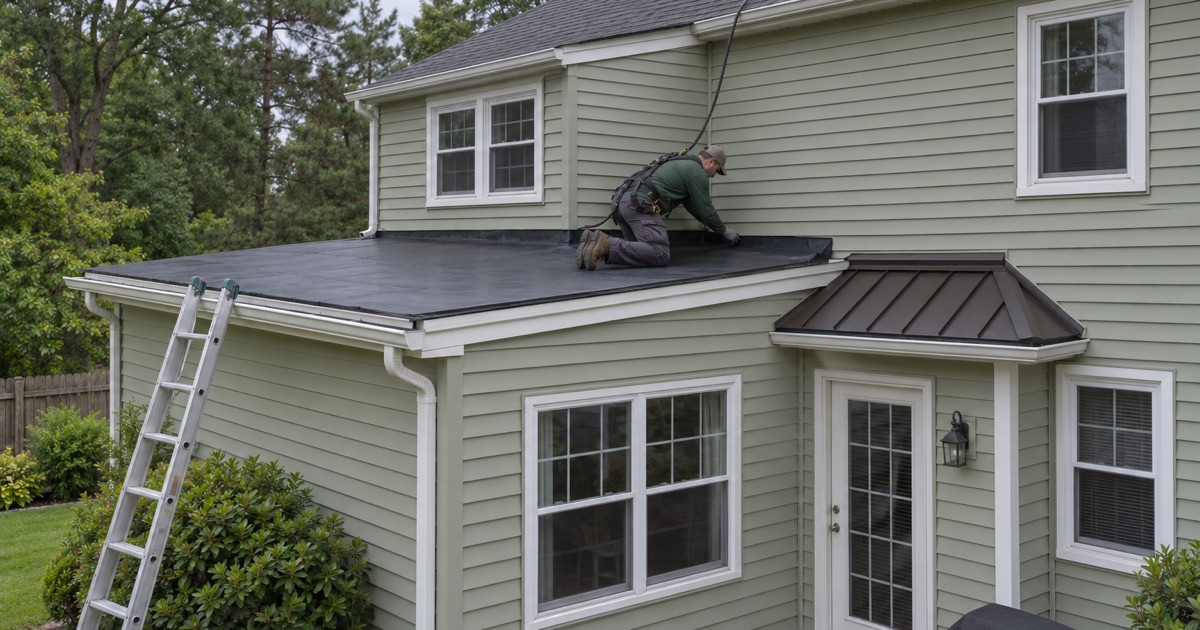
A roofer tucking a flat-roof membrane under the lowest shingle course where a Howell family-room addition meets the main roof.

Asphalt Shingle Types Compared

Three-tab shingles are thin and flat and rarely used on replacements now. Architectural laminated shingles such as GAF Timberline HDZ, Owens Corning Duration and CertainTeed Landmark add a second layer for depth and wind resistance. Designer lines imitate slate or shake, and impact-rated shingles tested to UL 2218 Class 4 resist hail.

Wind-Rated Shingles and Nailing

Shingles carry wind ratings such as ASTM D3161 Class F and ASTM D7158 Class H, but those ratings assume the shingle was nailed exactly as the manufacturer specifies. Nails driven high, crooked or too few per shingle let tabs lift in the first big storm. We nail to the manufacturer’s pattern so the rating on the wrapper holds up on the roof.

Standing Seam Metal Roofing

Standing seam metal panels run from eave to ridge with raised, locked seams and concealed fasteners, which leaves nothing exposed to back out over time. We install metal on full roofs and as an accent over porches and bay windows, detailing the eaves, valleys and wall transitions so expansion in summer heat does not open the seams.

Cedar Shake and Slate-Look Roofs

Real cedar shake and slate need specialized repair and cannot be roofed over under New Jersey’s re-roofing rule. When an owner wants the look without the upkeep, we show synthetic and designer asphalt options that imitate shake or slate, and we price a true tear-off when the existing roof is the real material.

Manufactured Home Roofs

Manufactured homes usually have shallow metal or membrane roofs with long seams that open as the home moves. We repair seams, recoat where the surface is still sound, and install roof-over systems that add a pitched or insulated cover over the original roof when patching no longer keeps water out.

Low-Slope Roofs: Modified Bitumen, EPDM and TPO

Porches, additions and commercial buildings often have flat or low-slope sections that shingles cannot handle. Torch-down SBS and APP modified bitumen, EPDM rubber and TPO or PVC single-ply membranes each suit different roofs, and we match the membrane to the slope, the drainage and what sits on the roof.

Roofs Under Tall Trees

Pines and oaks drop needles that pack valleys and gutters, and shade keeps moss growing on north slopes. We clear the valleys, call out limbs that touch or hang over the roof, and recommend algae-resistant shingles where shade is heavy, so a wooded lot does not take years off the roof.

Roof Coatings and Rejuvenation Sprays

Coatings can extend the life of a sound flat or metal roof by sealing a weathered surface. Rejuvenation sprays sold for asphalt shingles cannot restore lost granules or fix curled tabs. We tell you plainly when a coating will help and when a roof needs repair or replacement instead.

Storms, Insurance and Paying for a Roof

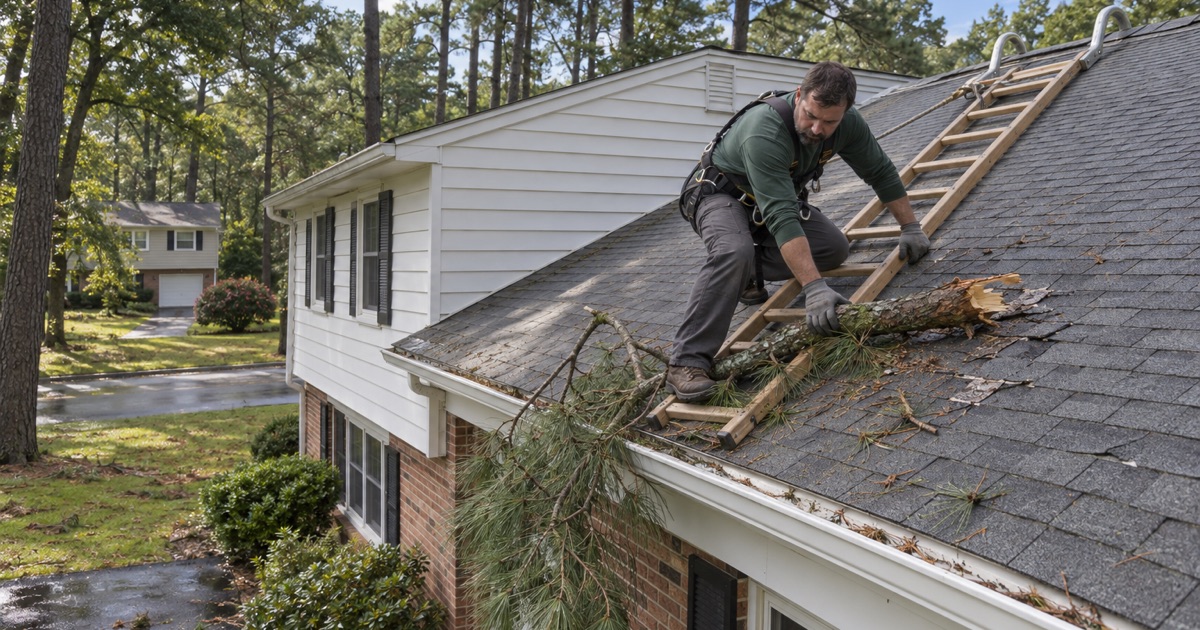
A roofer sliding a broken pine limb off the roof of a Howell split-level the morning after a thunderstorm.

First Steps After Storm Damage

After a storm, photograph the damage from the ground and inside before anything is moved, then stop the water. We tarp the same day, take our own dated photos, and keep receipts for every temporary repair, because those costs are usually part of the claim and adjusters ask for proof of each one.

A Tree or Large Limb on the Roof

In the first hour, get everyone out of the rooms below and stay away from downed wires. Do not climb onto the roof or try to cut the limb yourself. Call the utility for wires, then us: we coordinate with a tree crew to lift the weight off, then tarp the opening and document the damaged framing.

Tornado and Straight-Line Wind Damage Surveys

After a tornado, the National Weather Service office in Mount Holly surveys the path and rates it on the Enhanced Fujita scale. On April 1, 2023 an EF-2 tornado that began in Jackson ended in Howell. Those surveys record wind speed and path width, which helps your claim show the damage came from a confirmed event.

How a Homeowners Roof Claim Works in New Jersey

A claim starts with your insurer, who sends an adjuster to inspect and estimate the damage. The New Jersey Department of Banking and Insurance publishes storm claims guidance on timelines and your rights. We provide photos and a written damage report you can submit, and the claim stays between you and your insurer.

Wear and Tear Versus Storm Damage

Insurance pays for sudden damage, not age. Creased or torn shingles, lifted tabs and impact marks point to a storm; brittle, curled, granule-bare shingles point to wear. Claims are often denied when old wear is presented as storm damage, so our report separates the two honestly.

Public Adjusters in New Jersey

Only a licensed public adjuster, regulated under the Public Adjusters’ Licensing Act at N.J.S.A. 17:22B, may negotiate a claim on your behalf for a fee. A roofing contractor cannot. We document damage and meet the adjuster when invited, but we never negotiate your claim.

Sales Tax on a New Roof Versus a Repair

A full replacement is generally an exempt capital improvement in New Jersey, documented with Form ST-8, the Certificate of Exempt Capital Improvement. Repairs are generally taxable. Our estimates show repair and replacement work separately so the tax treatment is clear before you sign.

What Moves the Cost of a New Roof

Roof size and pitch set the base price. Layers to remove, rotten decking, chimney and skylight flashing, ventilation upgrades, the shingle line and access all move it from there. Because every one of those items is priced separately in our scope, you can see which choice changes the total and by how much.

Insurance on a 20-Year-Old Roof

Many policies settle older roofs at actual cash value, which subtracts depreciation for age, rather than full replacement cost. Coverage depends entirely on your policy wording. We document the storm damage clearly so the adjuster can weigh it, and we suggest reading the roof section of your policy before a storm, not after.

The 25 Percent Rule Is Florida’s, Not New Jersey’s

Florida has a rule tying replacement to how much of a roof is damaged, and online advice often repeats it as though it applied everywhere. New Jersey’s re-roofing requirements come from its own Uniform Construction Code instead. We explain the actual New Jersey rules so a claim or a repair decision is not built on another state’s law.

Roofing License or Registration in New Jersey

New Jersey has no state roofing license. What the state does require is home improvement contractor registration under the Contractors’ Business Registration Act, and you can confirm a contractor’s registration before signing. Our contracts are written to the state’s home improvement rules, including the three-day cancellation notice.

Injuries on Your Roof and Insurance

Roofing is dangerous work, and OSHA requires fall protection at 6 feet on residential roofs under 29 CFR 1926.501(b)(13). If a worker is hurt on your property, the contractor’s workers’ compensation and liability insurance should respond, not your homeowners policy. Ask any roofer for proof of both before work begins.
Areas We Serve

Howell Quality Roofing provides roofing throughout the greater Howell area, with the same crews and the same standards on every job.

Good to know

Frequently Asked Questions

How long does a roof replacement take on a typical Howell house?

Most single-family tear-offs on a colonial, split-level or ranch run one to two working days once the material is delivered. Steep roofs, more than one layer to remove, a lot of rotten decking or solar panels to take down and reinstall add time, and we put each of those in the schedule before the job starts.

Do you repair roofs or only replace them?

We do both, and we tell you which one the roof actually needs before replacement is discussed at all. A failed pipe boot, a lifted run of shingles or a bad chimney flashing is a repair. A roof with brittle shingles across every slope and leaks in several places is usually past patching.

What shingles do you install?

Most of our replacements use architectural laminated shingles such as GAF Timberline HDZ, Owens Corning Duration or CertainTeed Landmark. We also install impact-rated shingles tested to UL 2218 Class 4, standing seam metal, and low-slope membranes for flat sections.

Is your home improvement contract set up the way New Jersey requires?

Yes. Our contracts follow the state's home improvement rules, including the written notice of your right to cancel within three business days. Anyone doing home improvement work in New Jersey also has to register under the Contractors' Business Registration Act, and you can look a contractor up before you sign.

Will you meet my insurance adjuster?

When you ask us to, yes. We photograph the damage before anything is moved, write it up for your own claim, and walk the roof with the adjuster so both sides are looking at the same creased shingles, lifted tabs and broken flashing.

Do I pay sales tax on a new roof in New Jersey?

A full roof replacement is generally a capital improvement, and the owner signs Form ST-8, the Certificate of Exempt Capital Improvement, so the labor is not taxed. A repair is treated differently and is generally taxable, which is one reason our estimates keep repair and replacement work on separate lines.

Can you work on a roof that has solar panels?

Yes, but it has to be planned. The panels, racking and wiring come off before the tear-off and go back on afterward, and the solar installer or a qualified electrician usually handles that part. We build the removal and reinstall into the schedule so the roof is not left half-done waiting on a crew.

How do I compare two roofing estimates?

Line them up item by item. Ours lists tear-off, decking, underlayment, ice and water barrier, flashing, ventilation and gutters separately, with a per-sheet price for any rotten decking. If another bid lumps all of that into one number, ask what each part includes before comparing totals.

Do you clean up after the job?

Every work day ends with the driveway, beds, lawn and gutters cleared and a magnet sweep for roofing nails. On the last day we sweep again after the dumpster leaves, because nails that fall in the grass are the ones that end up in a tire.

Ready to Get Started?

Request a free quote today and we'll get back to you fast.