
Howell Quality Roofing has handled roof repair in Howell, NJ for more than 20 years, serving surrounding cities including Ramtown, Freehold Township, Wall, West Freehold and Vista Center. We fix leaks, torn and missing shingles, failed flashing, cracked pipe boots and storm damage on houses, townhouses and small commercial buildings.
A repair is only as good as the diagnosis behind it. Our first stop on any leak is the attic, where stained sheathing, wet insulation and rusted nail tips show where water actually crosses the deck. Then we go up on the roof and match what we saw inside to the shingle, vent or flashing above it.
We also tell you up front whether a repair is the right call. Many roofs that leak have one bad detail on an otherwise healthy surface, and those get repaired. When a roof is worn out across every slope, we say so, show you why, and still give you the price of the repair so the decision stays yours.
Shingle and Surface Repairs
Wind-Lifted and Missing Shingles
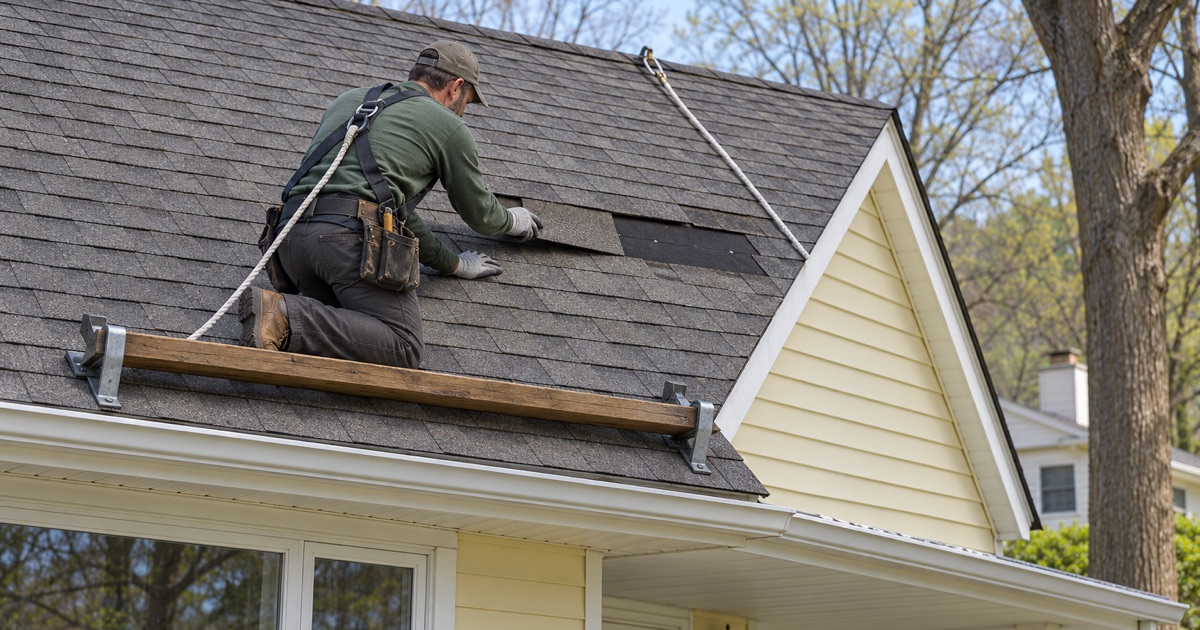
Strong gusts break the seal strip under a shingle, and once a tab lifts it can fold back, crease and tear free. We replace missing and creased shingles, reseal lifted tabs that are still sound, and renail with the manufacturer’s nailing pattern so the repaired area holds as well as the rest of the roof.
Where a whole run has lifted, we check for nails driven too high or at an angle, which is a common reason one slope sheds shingles while the others stay put. Fixing the nailing, not just the shingles, is what keeps the next storm from taking the same row.
A shingle’s wind rating, whether ASTM D3161 Class F or ASTM D7158 Class H, describes a shingle fastened the way the manufacturer tested it. Replacement shingles on a repair get the same four or six nails in the same strip, set flush rather than overdriven, so the patched area is rated for the same wind as the slope around it.
Nail Pops and Exposed Fasteners
As decking dries and shrinks, nails can back out and push up through the shingle above them. A popped nail lets water run straight down the shank into the deck. We pull or reset the nail, fasten the shingle properly beside the old hole, and replace the shingle if the hole has opened it up.
Granule Loss, Blistering and Brittle Shingles
Granules protect asphalt from sunlight, and bare patches age quickly. A few worn spots can be repaired, but granule-bare shingles on every slope usually mean the roof is nearing its end. We show you photos of what we find and explain which situation your roof is in.
Blisters are small bubbles where moisture or heat trapped in the shingle pushes the surface up, and they often point to poor attic ventilation cooking the roof from below. Repairing the blistered shingles without fixing the airflow only buys a season or two, so we look at soffit intake and ridge exhaust before recommending anything.
Flashing, Vents and Roof Penetrations
Chimney Flashing and Crickets
Chimneys leak where the roof meets the masonry. We rebuild step flashing along the sides and counter flashing cut into the mortar joints or a reglet, rather than smearing tar over old metal. Behind a chimney wider than 30 inches, a cricket, or saddle, sends water around instead of letting it pond, as IRC R1003.20 requires.
When the chimney itself is part of the problem, we look at the crown, the cap and the mortar joints too. A cracked crown or open joints let water into the masonry above the roofline, and new flashing alone will not stop that.
Pipe Boots and Lead Flashing Boots
The rubber collars around plumbing vents crack in the sun long before the shingles wear out, and a cracked boot is one of the most common leaks we find. We replace them with new boots or with lead flashing boots, slipped under the shingles above and over the shingles below so water sheds the right way.
Step, Apron and Kick-Out Flashing at Walls
Where a roof runs into a sidewall or dormer, each course of shingles needs its own piece of step flashing, and the bottom of the run needs a kick-out to throw water into the gutter. Missing kick-outs send water behind the siding and rot the wall. We open the joint, install the right flashing and close it up.
Where a low roof meets the face of a wall above it, an apron flashing does the same job across the top edge. We replace bent or rusted aprons when we find them, since a failed apron leaks into the wall below just as a missing kick-out does.
Skylight and Roof Vent Leaks
Skylights leak at the curb flashing more often than through the glass. Box vents, exhaust caps and ridge vents can leak when their flashing or fasteners loosen. We reflash the opening or replace the unit, and we check that bath and kitchen fans actually vent outdoors instead of into the attic.
That last check matters more than it sounds. A fan dumping warm, wet air into the attic frosts the underside of the deck in winter, and the melt drips onto the ceiling on the first warm day. It looks exactly like a roof leak, and no amount of roof repair will fix it.
Leaks That Start at the Edges
Ice Dams and Eave Leaks
In winter, heat leaking from the house melts snow that refreezes at the cold eave, and water backs up under the shingles. We repair the damaged eave, and on larger repairs we add ASTM D1970 self-adhering ice and water barrier. We also point out the attic air leaks and ventilation gaps that caused the dam.
Drip Edge, Fascia and Gutter Line Leaks
Without drip edge, water curls under the shingle edge and soaks the fascia and the top of the wall. We add or replace drip edge at the eaves and rakes, replace rotted fascia, and reset gutters so runoff lands in the trough. On pre-1978 homes we handle painted trim under the EPA RRP lead-safe rule.
Valleys Packed With Needles and Leaves
Valleys carry the most water on any roof, and on wooded Howell lots they fill with pine needles and leaves that hold moisture against the shingles. We clear them, repair worn or cracked valley shingles or metal, and call out overhanging limbs so the same debris does not return next fall.
Storm Damage and Emergency Repairs
Same-Day Tarps After Wind Storms
After a wind storm we tarp open areas the same day and photograph the damage before anything is moved. That protects the inside of the house and keeps a clean record of what the storm did, which matters when you file a claim.
Keep the receipts for that tarp and any other temporary work. Emergency measures taken to prevent further damage are usually part of a homeowners claim, and insurers ask for proof of what was done and what it cost. We give you an itemized invoice for the temporary repair separate from the permanent one.
Written Damage Reports for Insurance
We write up storm damage with photos for your own claim, separating fresh storm damage from older wear so the report holds up. When you ask, we meet your insurance adjuster on the roof. The claim itself stays between you and your insurer; in New Jersey only a licensed public adjuster may negotiate it for you.
When a Repair Is Not Enough
Some roofs reach the point where repairs only chase the next leak. Several leaks at once, soft decking in more than one place, or a second layer already on the roof are signs that replacement makes more sense. We explain what we see, and the decision stays with you.
- 20+ Years on Monmouth County Roofs
- Line-Item Written Estimates
- Same-Day Storm Tarping