
Howell Quality Roofing installs seamless gutters in Howell, NJ, serving surrounding cities including Ramtown, Freehold Township, Wall, West Freehold and Vista Center, and we have been tying gutters into the roofs we build for more than 20 years. A gutter is the last piece of the roof’s drainage system, and treating it that way is what keeps water off the fascia, out of the walls and away from the foundation.
We form seamless aluminum gutters on site to the exact length of each run, hang them on hidden hangers into solid fascia, and pitch them toward properly sized leaders. Before a gutter goes up, we make sure drip edge at the eave sends roof water into the trough and not behind it, which is where most gutter-related rot begins.
Gutter work appears as its own line on our estimates, whether it is part of a roof replacement or a separate job. That makes it easy to see what you are paying for, to compare our price with a gutter-only company, and to decide whether to replace gutters now or later.
Seamless Gutter Systems
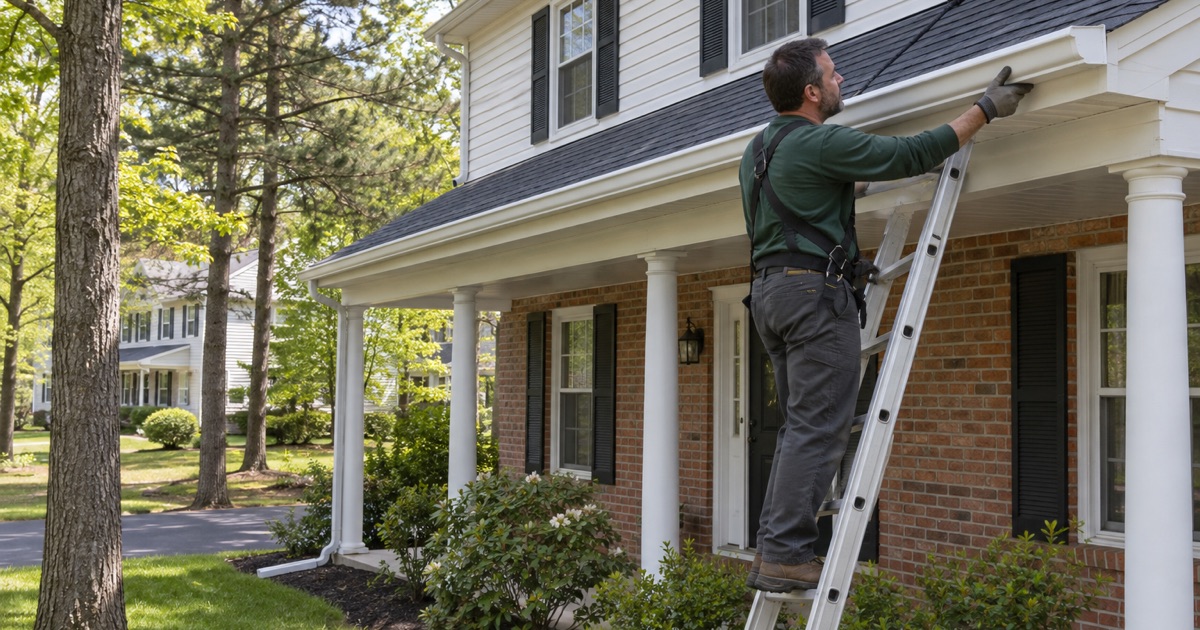
Seamless Aluminum Gutters Formed on Site
We bring a gutter machine to the house and roll each run from a coil of aluminum to the length the wall actually needs. With no seams along the straight runs, the only joints are at the corners and end caps, where they are sealed and riveted. Fewer joints means fewer drips and fewer places for ice to pry the system apart.
Colors are chosen to match or complement the trim, and the finish is baked on at the factory, so gutters do not need painting. We match leaders to the gutters so the whole system reads as part of the house.
K-Style and Half-Round Profiles
K-style gutters, with their flat back and decorative front, are the standard on most colonials, split-levels and ranches. They carry more water than a half-round gutter of the same width. Half-round gutters suit some older and more traditional homes, and we install them where the look matters to the house.
Half-round systems hang on exposed brackets rather than hidden hangers, so the bracket spacing and finish become part of the look. They also pair with round leaders, which suit older homes better than the rectangular downspouts used with K-style gutters. We show both profiles side by side so you can see how each one sits against your trim.
Sizing Gutters and Leaders to the Roof
Gutter size depends on how much roof drains into each run and how steep it is. A long rear slope that also catches water from an upper roof can overwhelm a standard 5-inch gutter in a heavy storm, while the same gutter is fine on a short front porch. We size gutters and leaders run by run, and add leaders where a long run needs more than one outlet.
Oversized leaders, such as 3-by-4-inch downspouts, move water faster and clog less, which matters most on houses with tall trees overhead. They cost slightly more and often prevent the overflow that makes people think they need bigger gutters.
Installed as Part of the Roof Edge
Drip Edge and the Gutter Line
Drip edge at the eave carries water off the shingle edge and into the gutter. Without it, water clings to the underside of the shingles, runs down the fascia and soaks the top of the wall behind the gutter. On every installation we check the drip edge and add or correct it, because a new gutter hung behind a missing drip edge still rots the fascia.
Pitch, Hangers and Fascia
Gutters need a steady pitch toward their outlets so water does not stand in the trough. We snap a line, set the pitch, and fasten hidden hangers with screws into solid fascia at close spacing so the gutter holds the weight of water, ice and wet leaves. Soft or rotted fascia is replaced before anything is hung.
On pre-1978 homes, removing old gutters and cutting into painted trim can disturb lead paint. We handle that work under the EPA RRP lead-safe rule, with containment and cleanup that keep paint chips out of the yard and garden beds.
Kick-Out Flashing Where Roofs Meet Walls
Where a roof edge ends against a sidewall, such as a garage roof meeting a two-story wall, a kick-out flashing turns the water into the gutter. Without it, water runs down the face of the wall and behind the siding. We install kick-outs as part of the gutter job whenever we find them missing, because a new gutter cannot catch water that never reaches it.
Missing kick-outs often show up first as a stain or soft spot on the siding below the roof edge, or as peeling paint on the trim beneath it. If we find damaged sheathing behind the siding at that spot, we show you before going further, since the wall repair is a separate decision from the gutter work.
Gutter Replacement During a Roof Replacement
The best time to replace gutters is often during a roof replacement. New drip edge can be set correctly, damaged fascia is exposed and easy to repair, and the gutters are not left half-attached between crews. When the existing gutters are sound, we remove and rehang them carefully instead.
Either way, the gutter line shows up as its own item in the roof scope, separate from tear-off, decking, underlayment and flashing. You can choose to keep the old gutters, rehang them or replace them, and see exactly what each choice adds to the total before the job is scheduled.
Downspouts, Drainage and Guards
Leaders That Carry Water Away
A gutter only moves water to the corner of the house; the leader has to take it from there. We place leaders where they can drain to ground that slopes away from the foundation, add extensions or elbows to discharge clear of the walls, and keep water off walkways and driveways where it would freeze in winter.
Roof runoff dumped next to the foundation is one of the most common sources of wet basements and crawl spaces. Moving that water a few feet farther out costs little and often solves a problem that looks much larger from inside.
Gutter Guards for Wooded Lots
Many Howell homes sit under oaks and pines that drop leaves and needles into the gutters every season. Guards reduce how often gutters need cleaning, but they are not all equal: coarse screens let pine needles through or hold them on top, while micro-mesh guards handle fine debris better. We recommend a guard based on the trees over your roof.
Guards also change what happens in a downpour. Some styles shed part of the water over the front of the gutter when rain is heavy, especially on steep roofs, so we match the guard to the roof pitch as well as the debris. Where a lot of water collects at one corner, a larger leader often does more than any guard.
Keeping Gutters in Good Repair
Howell adopted the International Property Maintenance Code, which expects gutters and downspouts to be maintained so roof drainage does not cause dampness or deterioration. Renting out a house in the township also requires a Rental Certificate, and the township’s guidelines list the gutters and downspouts among the items that must be in good repair.
- 20+ Years on Monmouth County Roofs
- Line-Item Written Estimates
- Same-Day Storm Tarping